
 Checked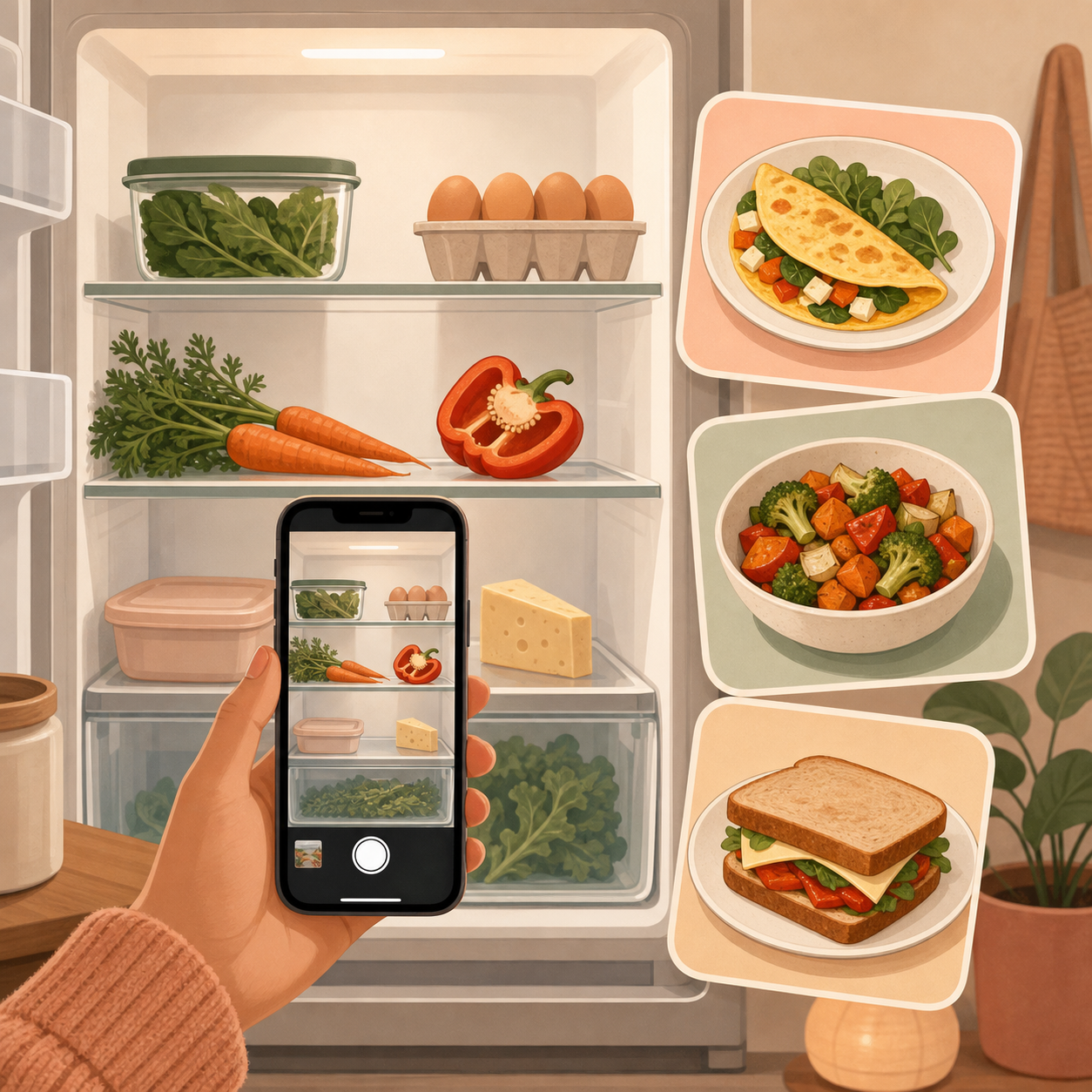
How to do it
Put the ingredients that need using up on the counter, or take a clear photo of the open fridge. Ask the AI for exactly three ideas so the answer stays useful instead of turning into a long recipe list.
A good prompt is: "I have these ingredients. Suggest three simple meal ideas: one quick pan meal, one cold option, and one kid-friendly option. Only use ingredients you can identify in the photo, and ask if something is unclear."
Ingredients
Start with what is actually visible: vegetables, cheese, eggs, cooked rice, pasta, bread, yogurt, herbs, or opened packets. Then add anything the photo cannot show well, such as spices, oil, pantry staples, or frozen food.
If the AI misidentifies something, correct it right away: "That is not feta, it is cream cheese." Then ask it to rank the three ideas by fastest option, least washing up, or best use of leftovers.
Why it helps
The point is not that AI magically creates a perfect recipe. It removes the first bit of friction: loose leftovers become concrete options. Small amounts are easy to ignore, even when they could become an omelet, wrap, soup, rice bowl, or toasted bread meal.
Keep the constraints tight: three ideas, maximum 20 minutes, normal pan, no extra shopping. That gives you suggestions that are more likely to fit a normal evening.
Check this yourself
Do not rely on AI for freshness or food safety. Check smell, appearance, storage, use-by dates, and your own judgement. If something looks or smells wrong, do not use it.
For better results, say who you are cooking for: vegetarian, no oven, mild for children, high protein, or one portion only. That turns generic recipe ideas into practical everyday options.
Sources
Selected references used to verify or support this tip.
- Images and vision OpenAI · official_docs