
 Checked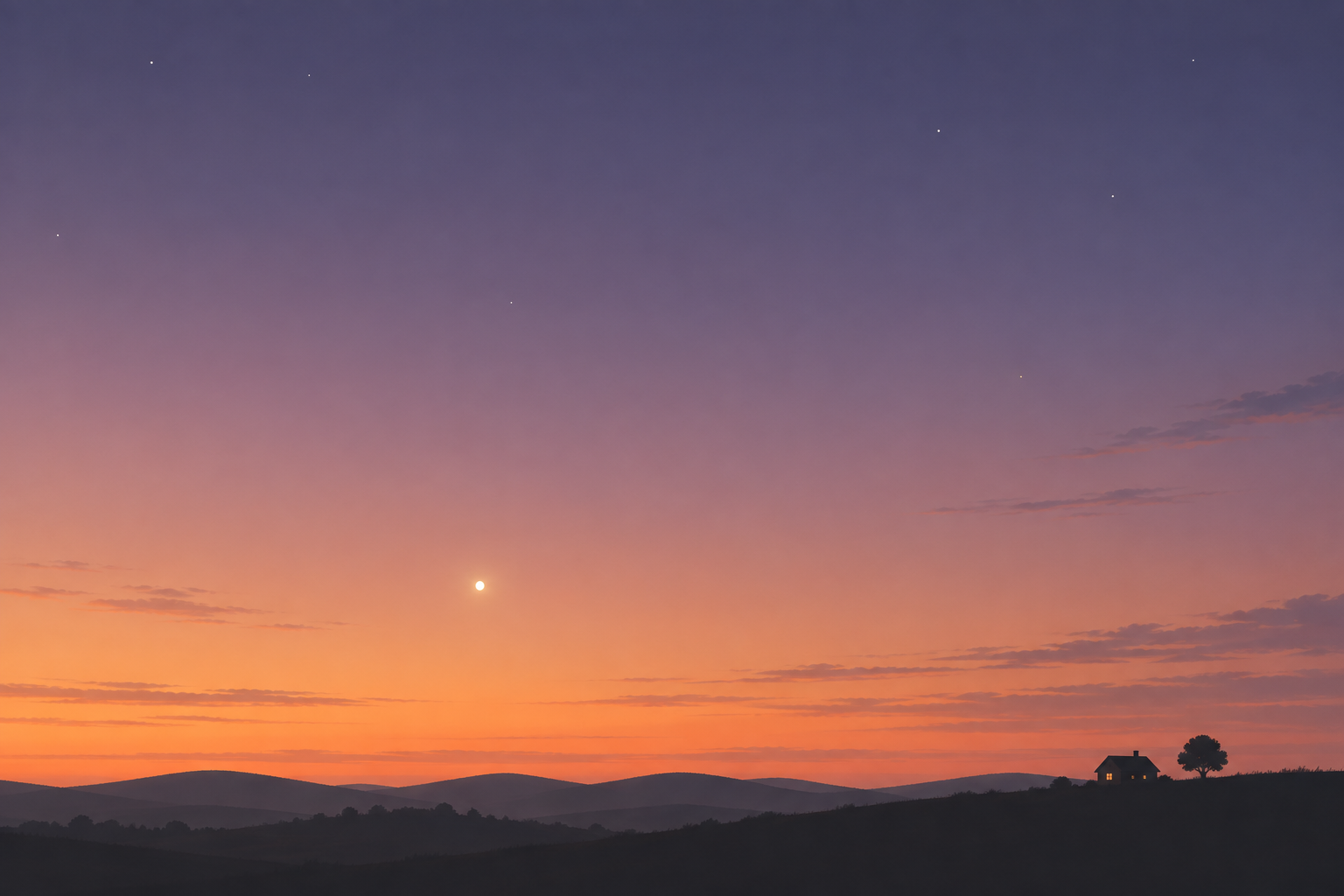
How to spot it
Look low in the west shortly after sunset. If one point is much brighter than the first stars around it, it may not be a star at all. Venus is the classic evening object; Jupiter can also look strikingly bright.
Use a quick clue: stars usually twinkle more because their light is disturbed by moving air. Planets often look steadier to the naked eye. It is not a perfect test, but it is a useful first filter.
Why Venus is called the evening star
Venus does not make its own light. It reflects sunlight and, from Earth, always stays relatively close to the Sun in the sky. That is why you see it before sunrise or after sunset, not in the middle of the night.
The name evening star sounds good, but it is not technically correct. Venus is a planet. The name stuck because it can be extremely bright and can appear early in twilight.
Do not trust brightness alone
Not every bright point is Venus. Jupiter can be very bright, Mars can look reddish, and aircraft or satellites can trick you because they move across the sky.
For a specific evening, the answer depends on date, location, horizon and weather. If you want certainty, open a sky map app or check a current monthly skywatching guide.
Quick outdoor rule
Very bright, just after sunset, low in the west: think Venus first. Very bright and visible for longer: Jupiter is possible. Strong twinkling points more toward a star.
Sources
Selected references used to verify or support this tip.
- NASA Skywatching NASA · official_docs
- NASA Night Sky Network: Jupiter in the Night Sky NASA/JPL Night Sky Network · official_docs