
 Checked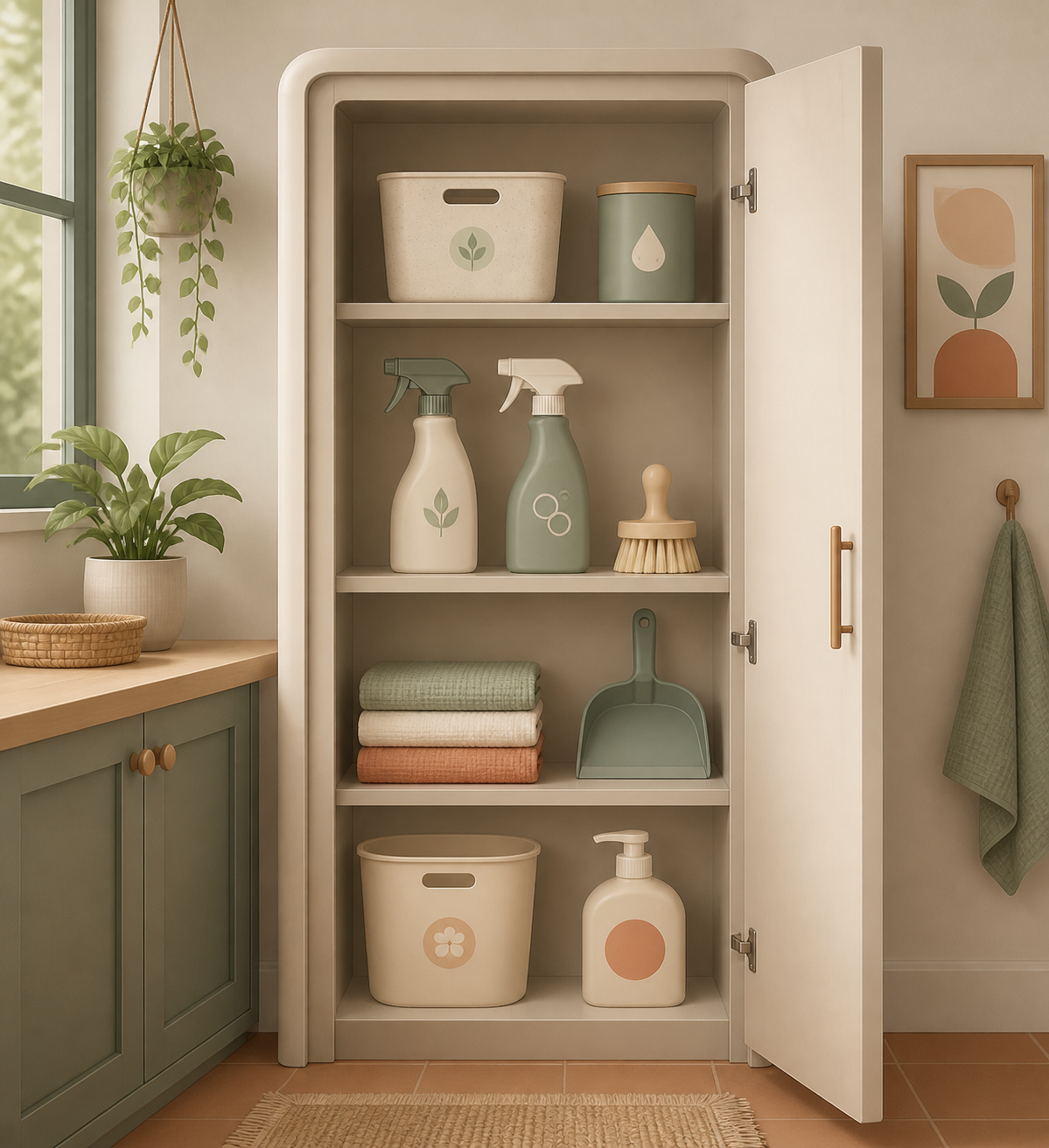
Start with what you actually use
Take every cleaner out of the cabinet and group the bottles by job: kitchen, bathroom, floors, glass, descaling and special cases. Keep only the products you use regularly and understand clearly.
For many everyday tasks, a small set is enough: mild dish soap, a neutral all-purpose cleaner, baking soda for odours and light scrubbing, plus vinegar or citric acid for limescale where the surface allows it. Test delicate surfaces first, especially natural stone, aluminium, coated materials and sensitive fittings.
Why fewer products can be safer
A crowded cabinet makes mistakes easier. You grab the wrong bottle, forget what something is for, or combine products that should stay separate. The big rule: do not mix bleach-based cleaners with ammonia, vinegar, acids or other cleaners. Those combinations can create dangerous fumes.
Fewer products also make restocking easier. You see what is missing, stop buying duplicates and avoid keeping old bottles whose labels or contents are no longer clear.
Build a small default set
Choose a standard set and label it clearly. Write what each product is for and what it must not be mixed with. Unknown, leaking or very old cleaners should not go back into the cabinet; dispose of them according to your local rules.
If a manufacturer requires a specific product for a surface or appliance, follow that guidance. This tip is not about proving that household remedies fix everything. It is about reducing unnecessary products and making the safe uses obvious.
A useful test
If you cannot explain in one sentence what a cleaner is for, how to dose it and what it must not be mixed with, it probably does not belong in your everyday cabinet.
Sources
Selected references used to verify or support this tip.
- Why You Should Never Mix Bleach and Ammonia Poison Control · government
- Safer Choice U.S. Environmental Protection Agency · government