
TL;DR
Salt accelerates protein bonding in eggs. Add it too early and they turn rubbery. Salt at the end for creamy results.
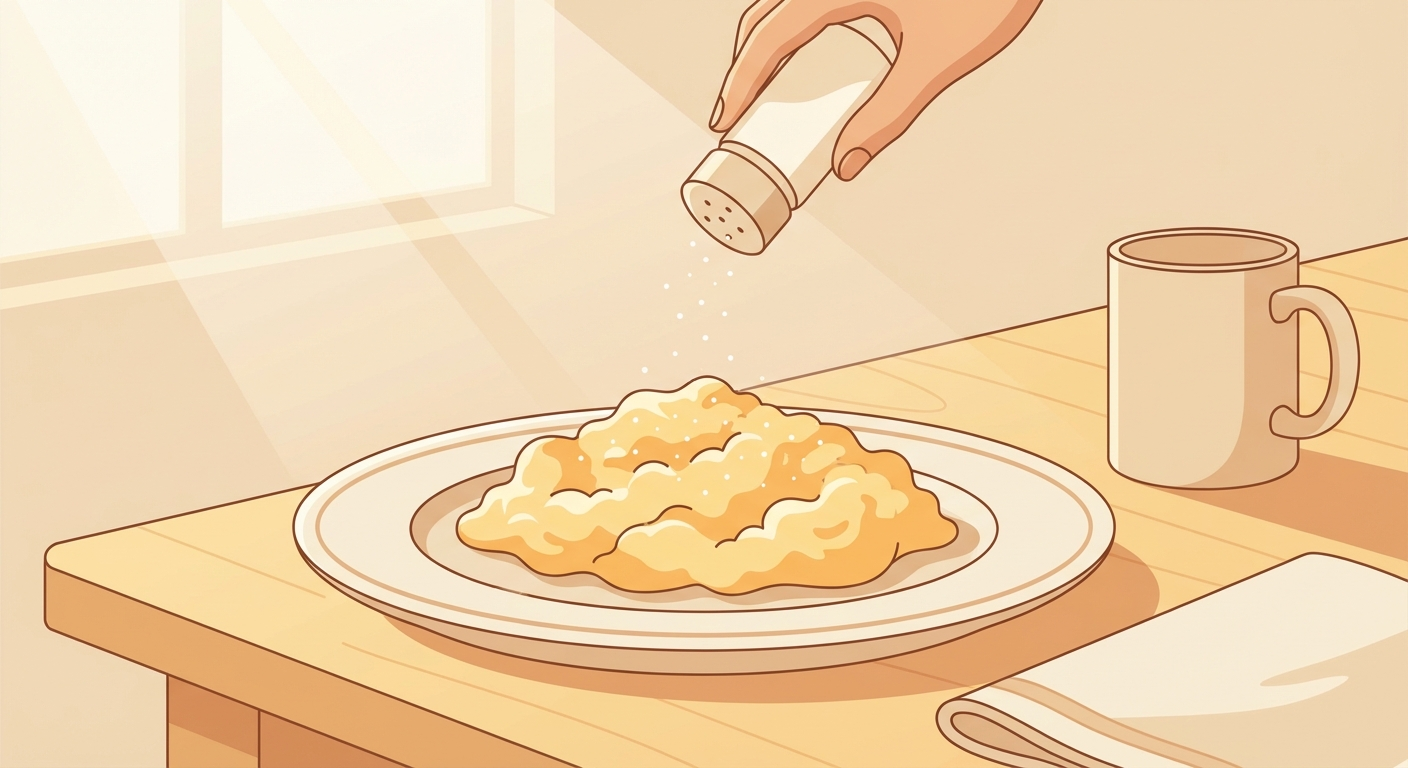 ## The Science Egg whites consist of proteins that form a network when heated. Salt accelerates this cross-linking. If you add it too early, the proteins contract more tightly, water gets squeezed out - the egg becomes dry and rubbery. Salt at the end, and more water stays trapped in the protein network: scrambled eggs stay creamy, fried eggs stay tender. ## What Really Happens Physically speaking: you control the **timing and intensity of denaturation**, not just the flavor. | When You Salt | What Happens | Result | |---------------|--------------|--------| | At the start | Proteins bond faster & tighter | Dry, rubbery | | At the end | Proteins set gently | Creamy, tender | ## The Technique ### For Scrambled Eggs 1. Beat eggs without salt 2. Cook low and slow, stirring gently 3. Remove from heat while still slightly wet 4. **Salt now** - they finish cooking off the heat ### For Fried Eggs 1. Cook to desired doneness 2. **Salt just before serving** ## The Takeaway 👉 **Heat makes eggs firm. Salt decides how firm.** This is not haute cuisine - it is molecule management at breakfast level. And that is exactly why it works so well.